


Benefit Corporation: Part of Softstar DNA
Softstar is an Oregon registered benefit corporation. What does that mean? Why are we proud of it? Simply put, it means our company doesn't just care about our bottom line, but we have governance policies in place to ensure their actions benefit all people, communities and the planet. Benefit Corporations are for-profit companies that have this desire to make a broader impact built into their legal DNA. I think when we hear the words “sustainable practices,” people mostly think of the environment, but really, we need to look at a societal impact too.
The Importance of Benefit Corporations
In today's day and age, sustainability is on the forefront of many people’s minds. Customers are looking to purchase from a business that they can feel good about, and businesses are getting that message! Knowing that sustainability is becoming increasingly important to shoppers, some businesses have unfortunately started using marketing tactics that portray their company and product as more environmentally friendly than they actually are—also known as “greenwashing.” This is why a movement started to brand benefit companies as "B-Corps" with third party audits with a recognizable logo. Looking for that B with a circle around it helps identify companies who have a proven, measurable commitment to the planet and the people on it, not just those who claim to. In 2023 we invested in obtaining our B Corp certification.
Being a B Corp
So, what does this mean for a little shoe company? With the help of B Lab's guidelines, we've been able to ask questions about how we can holistically improve our business for the betterment of not just our company, customers and the community we live in, but also the partners we buy from and evaluate how upstream companies are doing. When we first became B Corp certified in 2023, we received a score identifying areas that we were doing well and areas for improvement.
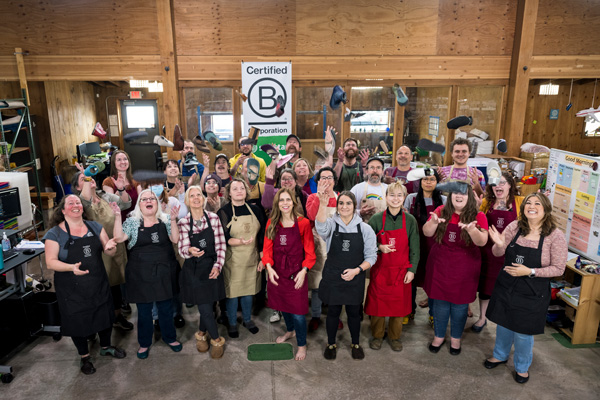
During our first assessment, we found that we just didn't have answers to some of the questions, including:
- How many pounds of waste do we produce each year?
- What is Softstar's carbon footprint?
- How many miles, on average, do employees typically commute in a year by car, bus, or train?
- How much water, electricity, and gas do we use in a year?
- How many of our vendors are owned by women?
- What percentage of our significant suppliers are located in low-income communities?
- What percentage of our supplies have a third-party social or environmental certification?
While these questions seem easy to answer at first glace, they're actually a bit more complex, especially calculating our carbon footprint. For example, we may be able to calculate how many miles employees travel to and from work by car, bus, or train, but we also have a number of employees that bike or carpool—how often are they doing that? I had to stop my brain from going down the wormhole of thinking about the weather for the past year! Maybe people biked less because of that two week-long cold snap we had. How about that several year-long road construction project that took up all of the bike lanes (I’m not bitter!) on one of the main routes to work?
Next Steps
I have been working hard to gather answers to as many of those unanswered questions as possible, as well as getting ready to report all of the other great improvements we have made over the past few years. We are a dynamic company, and things are always changing, meaning my evaluations are not a one-and-done deal. For example, we're constantly expanding and changing our material options, so it can be hard to keep up with the most accurate vendor reporting! We love our suppliers and have been very careful about who we choose to purchase from. I’m happy to report that, in looking at just our leather, we are close to 100% of our vendors having third-party certificates. I would love to give you a firm number, but did I mention we keep changing up our offerings? 😊
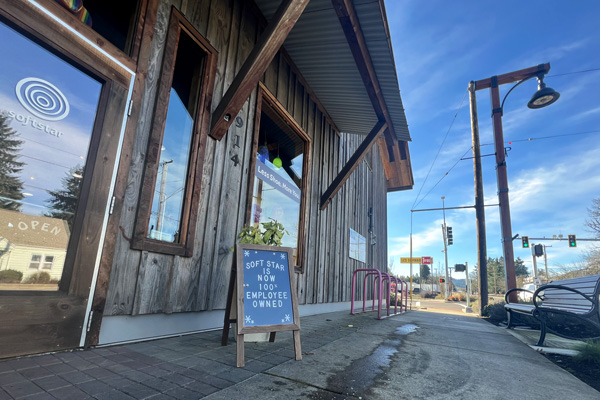
One area that I am particularly excited to answer if we decide to recertify is regarding the new employee ownership model for Softstar. I will be so proud to enter that we are employee-owned now! The last certification model awarded huge points for employee-owned, mission based entities and I hope the new certification standards coming out this year are consistent in this way.
On a side note, if anyone has a great idea for what we can do with very small scraps of leather (think stringy, short pieces), we would love to hear from you! We currently put these scraps in our free bin in our retail area, where customers mostly snub it, and then it goes into our waste bin. I feel bad every time... Our larger scraps are made into cat toys, discounted shoes, and given away to customers. I’ve almost seen some fights in the showroom over some particularly eye-catching scrap. Just kidding, but I swear I could feel the tension in the air!
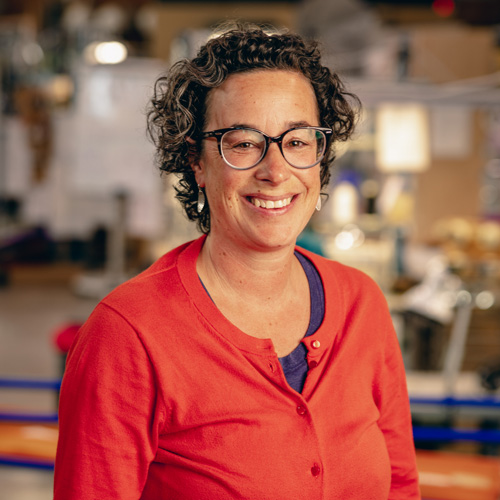
Hava Terry is a 15 year veteran of Softstar who truly embodies Softstar values with her amiable nature, empathy, and leadership. She has an amazing laugh, which radiates through the shop, bringing joy to everyone even on the most stressful days, As our Sustainability Coordinator, Hava has a personal passion for sustainability in her personal life, her community and at Softstar. She bikes everywhere around town and was one of the first to invest in an electric car. She supports local community youth programs, reuse/recycling programs, rescues dogs, and is an organic gardener who on many occasions has been found planting blueberry and tomato plants in our employee garden for us to enjoy on breaks.
But, if you had a lot of one color and you made something like a purse/handbag with frills or some kind of western wear item like a cowboy boot or a vest or jacket and used a number of scraps of one or two colors in each item?